When a Front Wheel Falls Off: 2001 Toyota Tundra Ball Joint Failure (Suwanee, GA)
The Call
A client contacted me regarding a serious failure on his 2001 Toyota Tundra, a work truck used for low-voltage electrical work. While driving, the front driver-side wheel separated, the truck lost control, and the interior kick panel popped loose. The vehicle was towed back to his job site in Suwanee, GA, and a mobile service call was scheduled for the following day.
Based on the description alone, I suspected a lower ball joint failure, a known safety issue on older Toyota trucks.
Vehicle Use Case
This Tundra is a daily-use commercial vehicle.
It routinely carries:
Electronics and low-voltage equipment
Tools and ladders
Multiple workers
While the loads are moderate for a full-size truck, the vehicle:
Accumulates hundreds of miles per day
Operates under frequent stop-and-go conditions
Experiences consistent wear from commercial use
Like many service-area work trucks in the region, this vehicle sees long daily routes with frequent stops between job sites, which plays a significant role in suspension wear.
At the time of service, the truck had over 300,000 miles, reflecting long-term commercial use and influencing replacement planning. Despite the mileage, the engine continued to run smoothly and quietly, which contributed to the decision to keep it in short-term service.
Initial Inspection
Upon arrival, the vehicle was safely secured and lifted to allow proper inspection of the front suspension components.
Once access was gained, the failure was immediately visible.
What Failed — and Why
The front lower ball joint had completely separated.
When a lower ball joint fails on this generation of Toyota Tundra, the suspension can collapse suddenly, allowing the wheel to shift rearward into the wheel well. That is exactly what occurred here.
As a result:
The wheel was forced backward
The inner wheel well was deformed
Seam sealer was broken
Force transferred into the cabin, causing the interior kick panel to pop loose
This was a structural suspension failure, not a cosmetic issue.
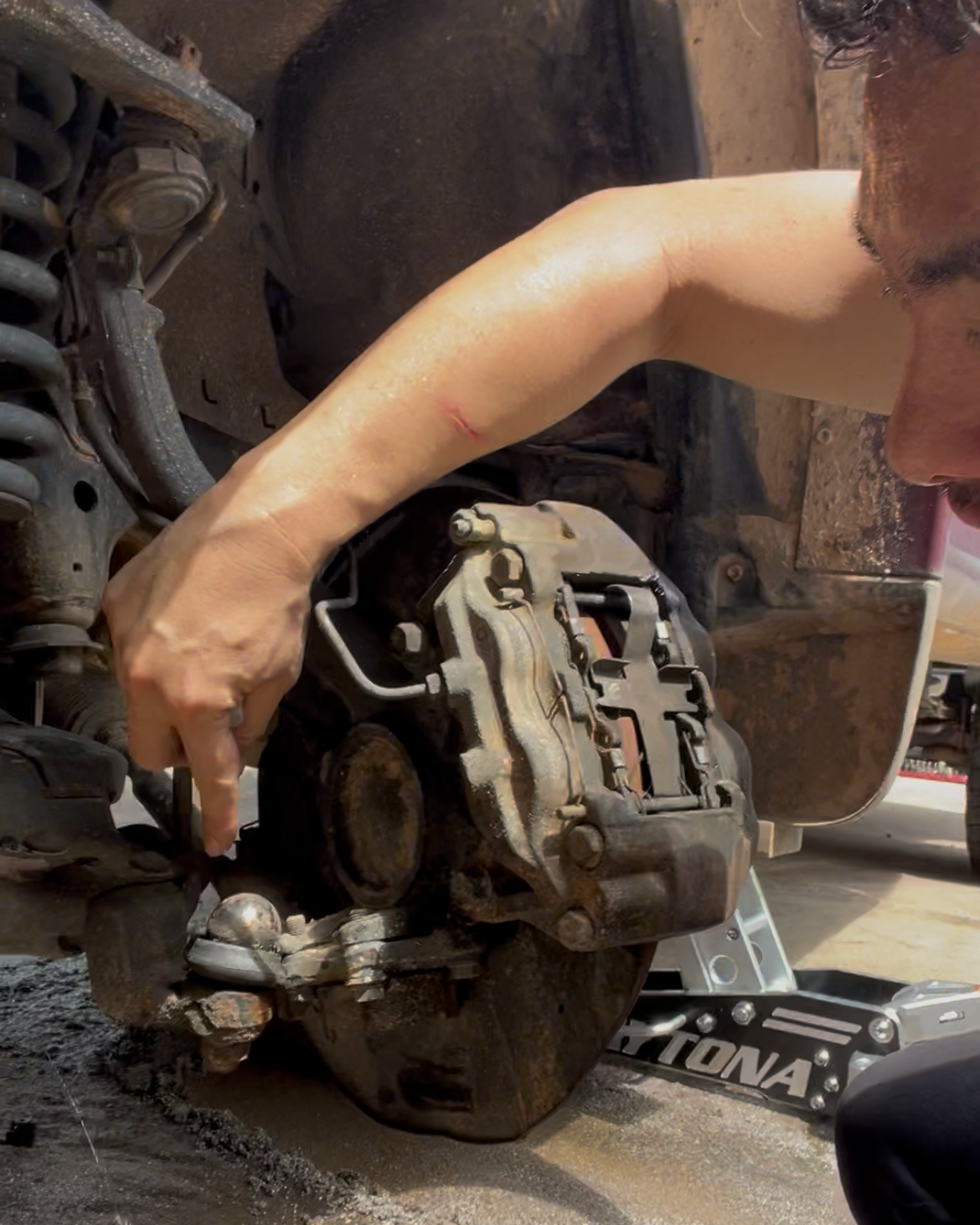
Lower Ball Joint Failure
The front lower ball joint separated, allowing the wheel and suspension to collapse backward.
Additional Findings During Inspection
While inspecting the surrounding components, additional wear was noted:
Worn lower shock bushings
Excessive wear in the front strut assemblies
Although these were not the original reason for the service call, they directly affect:
Stability
Tire wear
Ride control
Long-term reliability on a high-mileage work truck
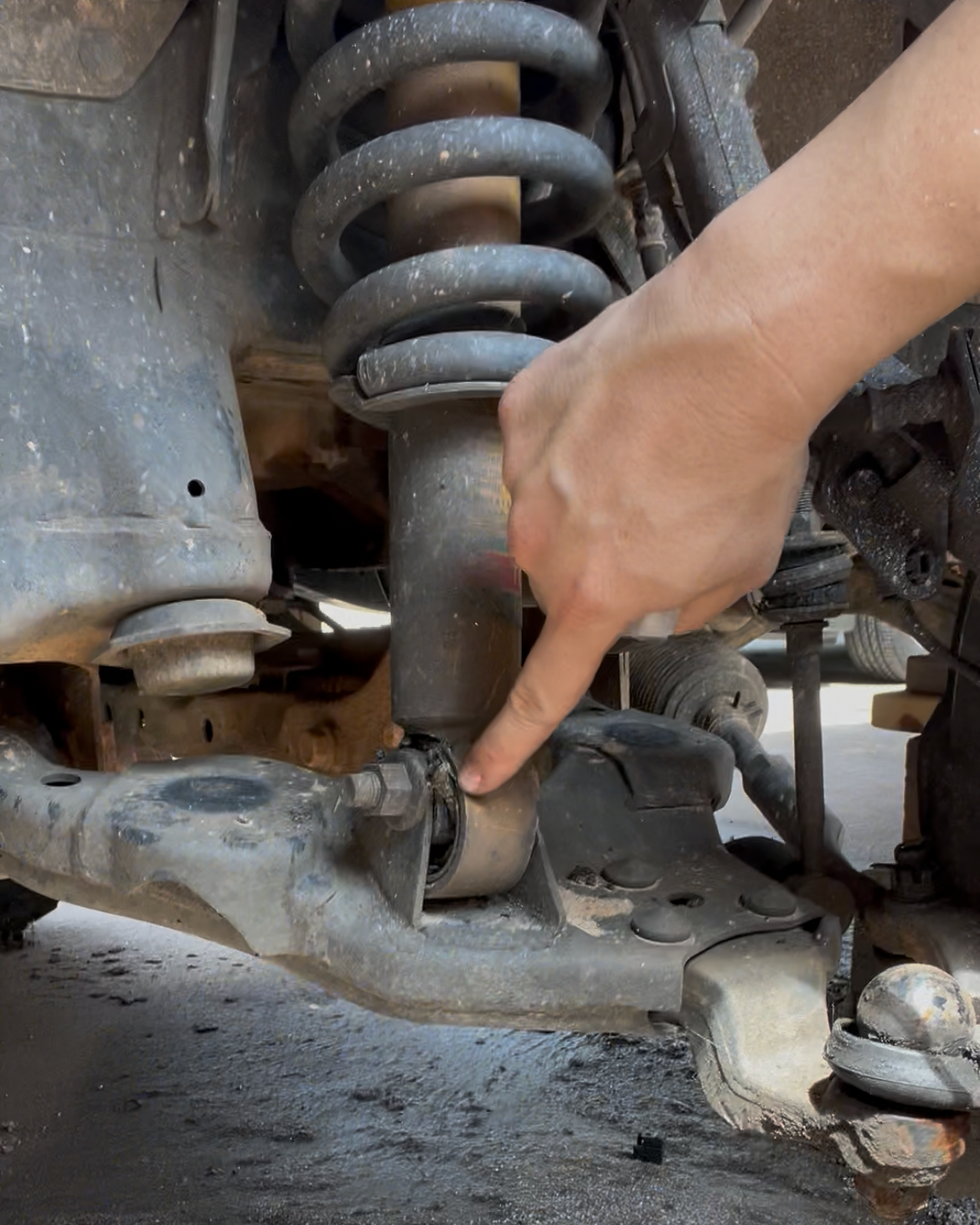
Suspension Wear from High-Mileage Use
Adjacent suspension components showed age-related wear consistent with long-term commercial driving.
Authorization & Scope Expansion
After reviewing the findings:
The immediate safety repair (lower ball joints) was approved
The fleet manager then authorized a paid drivability inspection
Based on that inspection, both front strut assemblies were approved for replacement
No work was performed without authorization.
Repairs Performed
The following repairs were completed on-site:
Replaced left and right front lower ball joints
Replaced both front strut assemblies
These repairs restored:
Proper suspension geometry
Steering control
Predictable handling under load
Alignment Recommendation
Because major suspension components were replaced and geometry was affected, a professional alignment was recommended.
Alignments are not offered as a mobile service, so the vehicle was referred to a dedicated alignment shop to ensure:
Proper tire wear
Straight tracking
Long-term suspension life
This step is especially important on commercial vehicles that see daily mileage.
Body Damage, Water Intrusion, and Safety Considerations
During inspection, it was clear that the wheel’s rearward movement had broken the seam sealer in the inner wheel well.
I explained to the client and fleet manager that driving in wet conditions could allow water intrusion into the kick panel area, where electrical components such as fuse blocks and control modules are commonly located. Over time, this can lead to corrosion or electrical issues.
For those reasons, the damaged wheel well was referred to a body shop for evaluation.
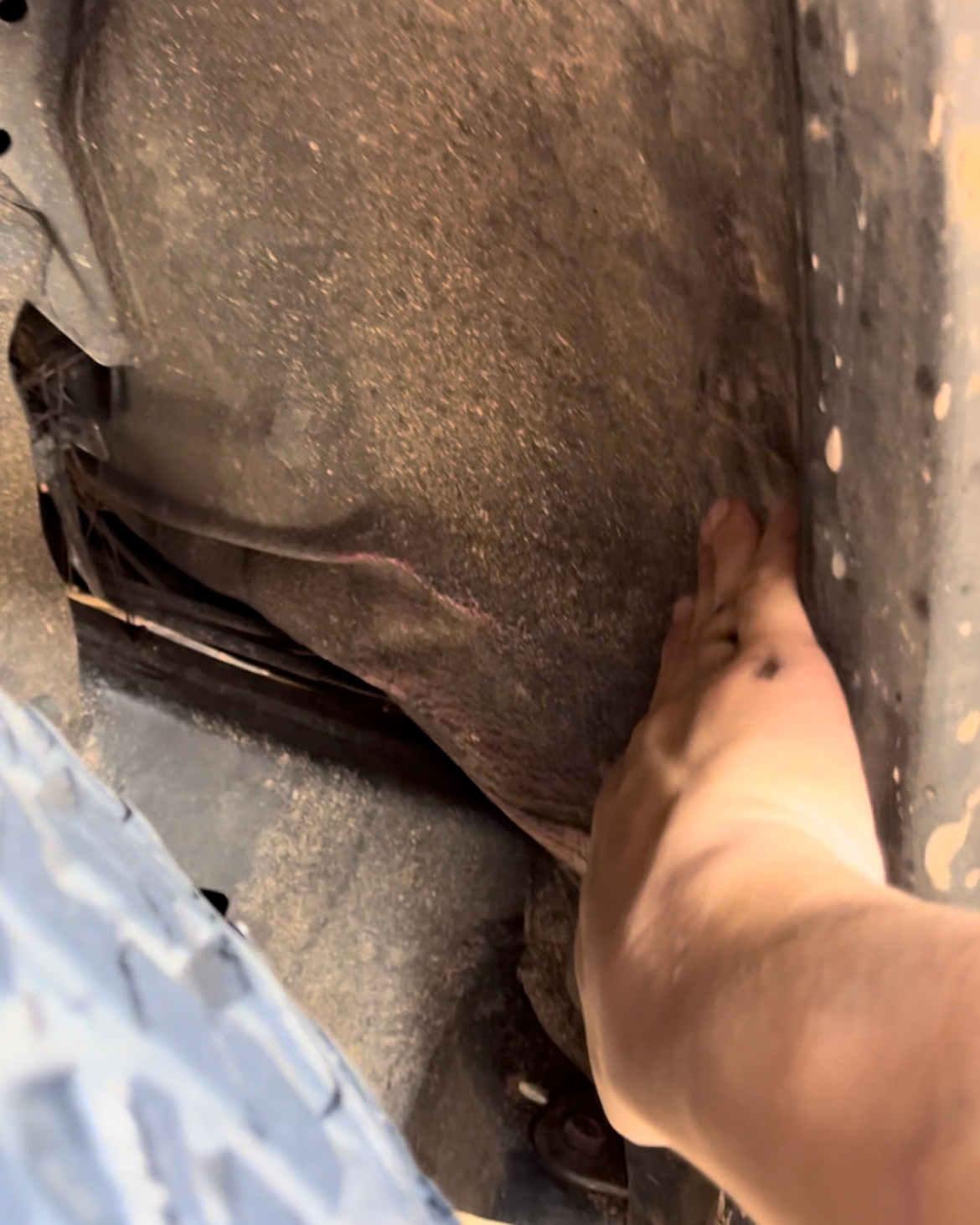
Wheel Well Deformation
The collapsed suspension forced the wheel rearward, deforming the inner wheel well and breaking seam sealing.
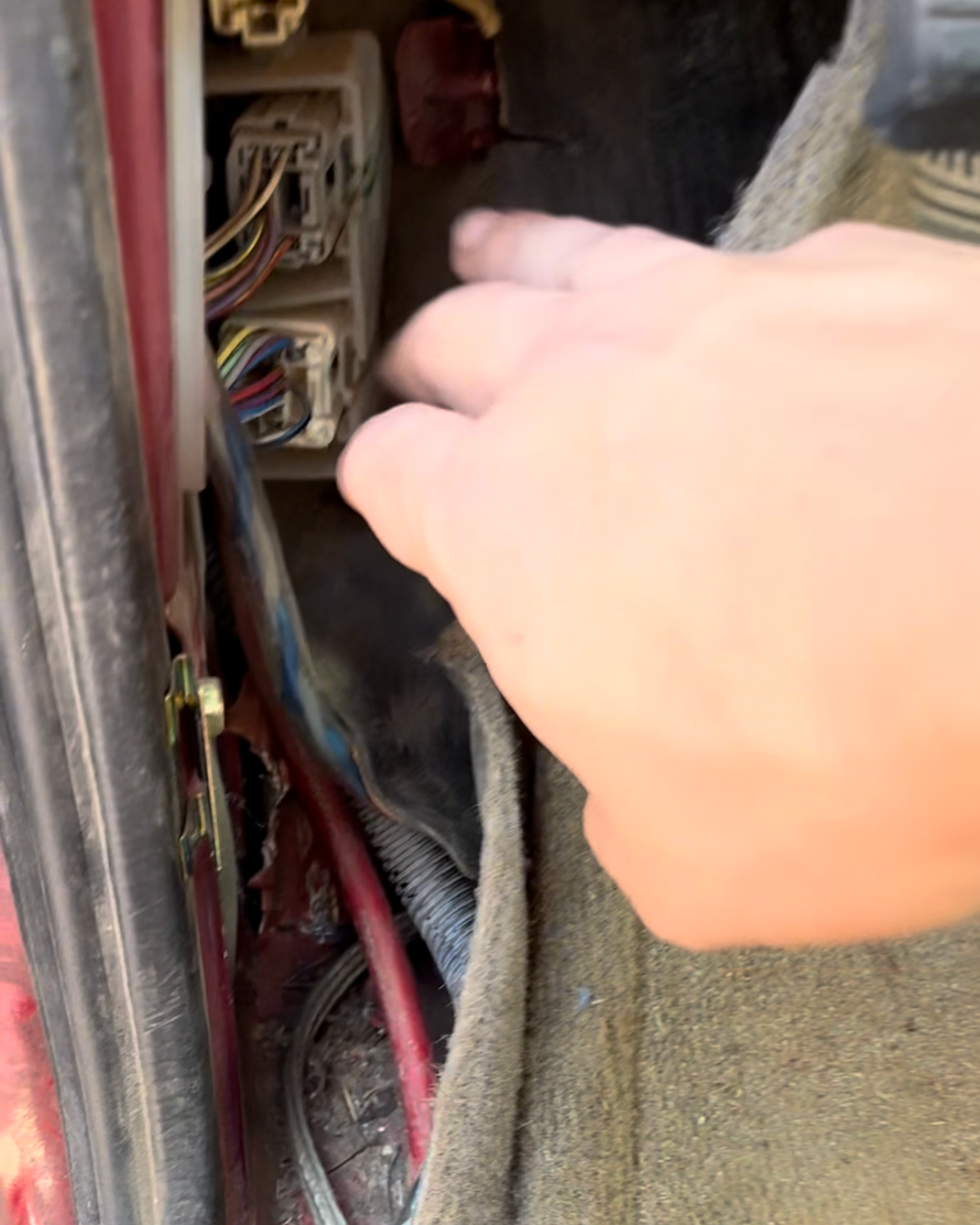
Interior Impact Area
Damage near the kick panel raised concerns about potential water intrusion around electrical components.
Why the Body Repair Was Deferred
After reviewing repair costs and the overall condition of the vehicle, the decision was made not to proceed with body repairs.
With over 300,000 miles on the vehicle and replacement planning already underway, the client chose to:
Keep the truck in service for a few more months
Use that time to source a newer, lower-mileage replacement vehicle
Avoid investing in body repairs that exceeded the truck’s remaining value
With the suspension restored and the vehicle mechanically safe to operate, this approach aligned with their operational timeline.
Takeaway: Why Ball Joint Wear Should Never Be Ignored
On older Toyota trucks, lower ball joint wear can progress quietly until it fails suddenly.
Common warning signs include:
Clunking or popping noises
Steering looseness
Uneven tire wear
On high-mileage work trucks, more frequent suspension inspections help catch wear early. Simple shake-down checks of steering and suspension components during routine service often reveal looseness before it turns into a failure.
Similar lower ball joint wear patterns have been seen on other Toyota trucks and SUVs from the same era, including certain Tundra, Sequoia, and 4Runner models, especially when used for commercial or high-mileage driving.
Final Outcome
The suspension failure was properly diagnosed and repaired
Drivability and steering control were restored
A professional alignment was recommended following suspension work
Body damage risks and water intrusion concerns were clearly communicated
The client made an informed decision based on short-term use and planned vehicle replacement
